Castells Music
A resource for English speakers
Introduction
I'm trying to create an English language resource for someone learning to play music for castells. I'm sure there's plenty of good stuff online, but as a non-catalan speaker, I find it hard to locate, let alone understand! Here is my best attempt and capturing everything I've learned during my time in castells.
Disclaimer: I am not from Catalunya so I cannot claim to authentically represent Catalan tradition and culture. Any mistakes are my own.
Thanks to David Vivanco for mentoring me and teaching be all the fundamentals and more. Thanks to the lovely Edinburgh músics as well for teaching me so much about the catalan culture and for showing me so many new songs!
I also have a YouTube channel where I post tutorials, music and practice tracks. You can find that here.
- Peter Marsh
former Cap de musics, Colla Castellera d'Edinburgh, Feb 2024 - June 2026
Contents
The Gralla
The gralla is the main melody instrument in castells music. It is a double reeded instrument like an oboe, and it is remarkably loud - which makes it very easy for the the castellers to hear it, even outside in a crowded square. It shares its name with the jackdaw.
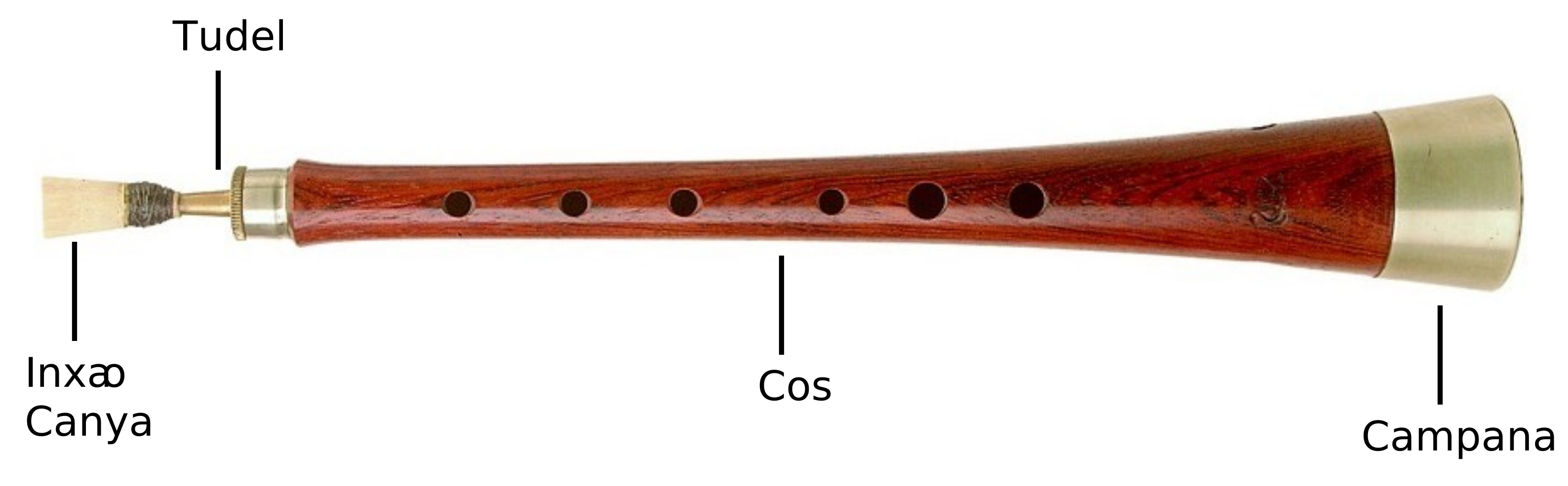
The gralla is made up of several parts:
- The inxa, also known as the canya, is the set of two reeds that product the instrument's sound. The reeds are delicately thin and bound together in a coloured thred. The colour of the thread indicates how hard the reeds are to play.
- The tudel is a metal conical tube that joins the inxa to the body of the instrument. Usually it is attached to a cork on one end which slots into the body, and the inxa gets pushed onto the pointy end.
- The cos is the main body of the instrument.
- The campana is the end of the instrument, which amplifies the sound.
Taking care of the gralla
There are a few things to keep in mind if you want to keep your gralla in the best condition.
Storing the inxa: The inxa is a delicate piece of wood. If it breaks or becomes mishapen, it won't sound effectively and you will have to replace it. It is worth detaching from the instrument after each use and storing it in a rigid case to protect it. I keep mine in a small sewing tin. Make sure you air-out your inxes so they don't get mouldy!
Cleaning: It is worth running a cloth through the instrument to remove moisture buildup. There are handy "pull-through" or "swab" cloths you can buy, usually for clarinets, which have a long string with a weight on the end to make it easier to pass through the instrument.
You can sterilise the inxa and prevent mould by dipping it in alcohol. Whisky does the trick!
Interesting articles
Scale and Notation
These are the basic notes for the gralla and flabiol. For the fingering diagrams, a black circle represents a covered hole (put your finger down), and a white circle represents an open cole (lift your finger up). The topmost circle represents the thumb hold on the bottom of the instrument.
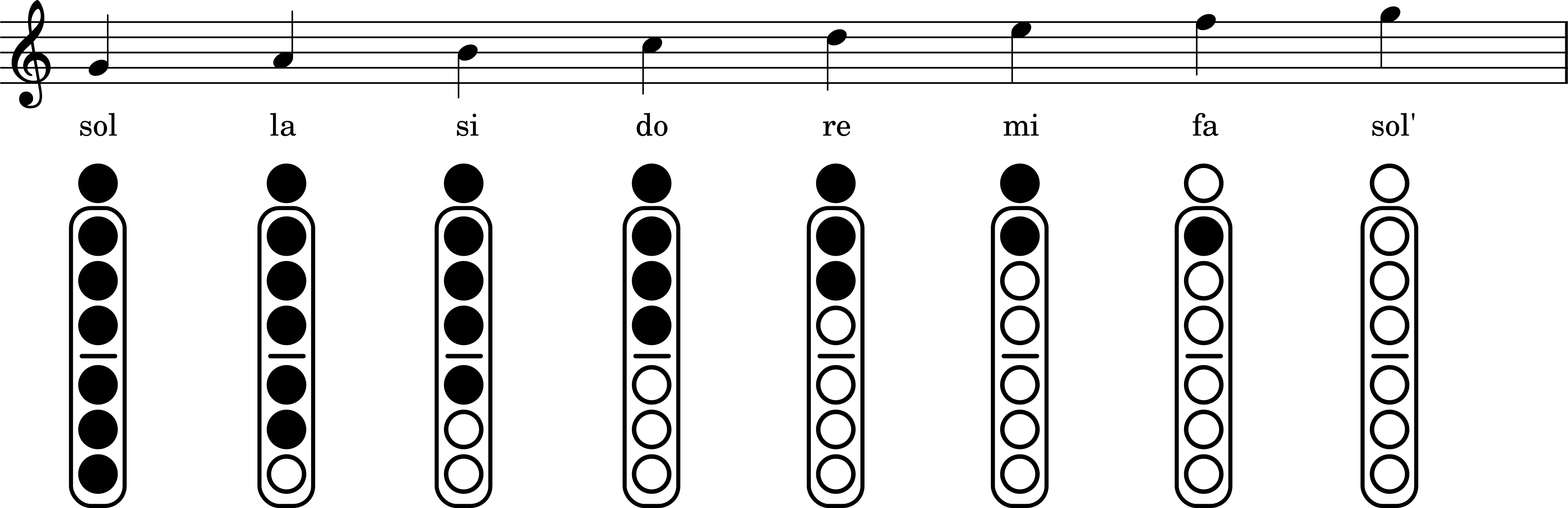
Note: This is not written to concert pitch! This means that the 'c' or 'do' on your instrument might not be the same as one on a different instrument.
Library
These are the tunes we play in Edinburgh!
Scottish tunes:
Extended Library
Here is a bunch of sheet music, currently unorganised, but available for reference.